2026 Top Double Stainless Steel Sink Buying Guide?
Choosing a Sink Double Stainless Steel is not merely a style decision. It affects washing space, water control, cleaning effort, and daily kitchen comfort. A double-bowl model can separate rinsing from soaking, but its center divider may restrict large cookware. That trade-off is easy to overlook.
Recent industry research supports careful comparison. The 2024 U.S. Houzz Kitchen Trends Study shows that homeowners continue investing in durable, practical kitchen upgrades. Sink replacement remains connected with broader countertop, faucet, and storage renovations. Grand View Research also identifies stainless steel as a major kitchen sink material, supported by its corrosion resistance, hygienic surface, and broad price range. These reports indicate demand. They do not prove that every double-bowl design suits every home.
BLANCO design specialist Tim Schroeder describes the sink as “the most used fixture in the kitchen.” That perspective matters when comparing bowl depth, divider height, steel thickness, sound insulation, and drain placement. Look closely. A polished surface may show water spots under bright lighting. A deep bowl may strain your back during long washing sessions. A thin divider may help with oversized pans, yet reduce separation between tasks. No model is perfect. I would still test a sample with your largest pan before buying. This 2026 guide examines construction quality, installation types, dimensions, accessories, maintenance, and long-term value, helping readers choose a Sink Double Stainless Steel with fewer surprises.
What Is a Double Stainless Steel Sink?
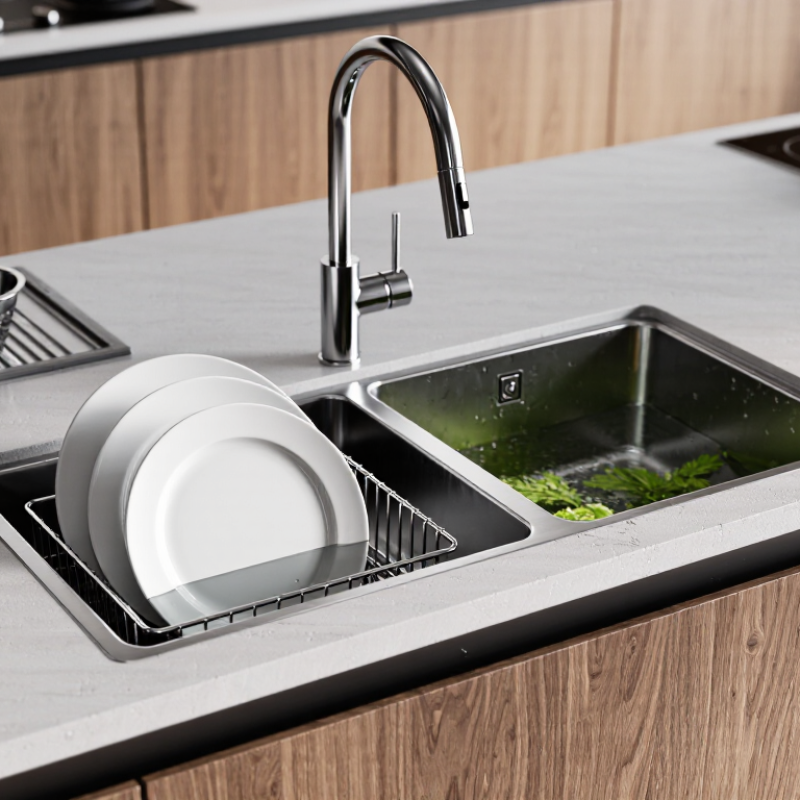
A double stainless steel sink is one basin divided into two separate compartments by a fixed center wall. Both bowls share one countertop cutout, drain system, and faucet area. This layout supports two tasks at once: soaking cookware in one bowl while rinsing vegetables in the other. It is different from a single-bowl sink, which offers more uninterrupted space for large pans.
Stainless steel remains popular because it is durable, relatively light, and easy to clean. The 2024 Houzz U.S. Kitchen Trends Study surveyed 1,559 homeowners and reported that undermount sinks remained a common remodeling choice. That finding matters because an undermount double sink creates a smoother countertop edge and fewer crumbs around the rim. The Freedonia Group’s kitchen and bathroom sink research also identifies stainless steel as a major material category in residential construction and remodeling.
When evaluating a double model, measure the cabinet first. A 60/40 bowl split gives one deeper working area, while a 50/50 split feels more balanced. Look for 18-gauge or 16-gauge steel, sound-absorbing pads, and a gently sloped base. A flat bottom may look practical, but it can leave dirty water behind. That detail is easy to miss. Double bowls can also restrict wide baking trays, especially in compact kitchens. A deeper sink is not automatically better; bending discomfort and slow drainage can offset its extra capacity.
2026 Top Double Stainless Steel Sink Buying Guide: What Is a Double Stainless Steel Sink?
A double stainless steel sink has two separate bowls in one countertop unit. The bowls may be equal in size or divided into different proportions for washing, rinsing, soaking, and food preparation.
How to read the chart: The chart uses a representative 30-inch double-bowl sink with an approximate 28-inch usable interior width. Bowl widths are calculated from common 50/50, 60/40, and 40/60 configurations. Actual dimensions vary according to the sink rim, divider, corner radius, and manufacturer specifications.
Which Stainless Steel Grades and Sink Features Matter Most?
Choosing a double stainless steel sink starts with the steel grade, not the shine. Grade 304 is a dependable choice for most kitchens because it resists rust, food acids, and daily moisture. Grade 316 offers stronger resistance in coastal or highly humid environments. It usually costs more. Grade 430 is more affordable and magnetic, but it generally provides less corrosion resistance.
Thickness matters, but gauge numbers can confuse buyers. A lower gauge usually means thicker steel. I prefer a sturdy basin that feels stable when pressing near the drain. Thin metal may vibrate loudly. That said, thickness alone does not guarantee quality. Poor installation can make even a heavy sink sound hollow.
Look for full or partial sound-absorbing pads beneath each bowl. They reduce the clatter of pans and running water. A gently sloped base helps water reach the drain instead of leaving cloudy puddles. Tight corners look modern, but rounded corners clean faster. I once chose sharp corners for appearance and regretted the extra scrubbing. A deep bowl can hide dishes, yet it may strain shorter users.
Check the divider height carefully. A low divider allows large trays to lie across both bowls. A high divider contains splashes more effectively. Choose a brushed finish that hides small scratches from everyday use. Confirm the drain size, cabinet clearance, mounting method, and accessory compatibility before ordering. These details are easy to overlook. They often determine whether the sink feels practical after installation.
How to Choose the Right Double Sink Size and Configuration
A double stainless steel sink should fit your workflow, not merely the countertop opening. The NKBA Kitchen Planning Guidelines recommend at least 24 inches of landing space on one side and 18 inches on the other. Measure those areas before choosing a basin. A 30-inch sink base often suits compact kitchens, while a 33- or 36-inch cabinet gives each bowl more usable width. Leave room for clips, plumbing, and insulation.
The configuration matters just as much. A 50/50 split supports two large pans, but a 60/40 split handles baking trays more comfortably. Choose the deeper bowl carefully. A 9-inch basin can improve capacity, yet it may strain your back if the counter is low. The 2024 Houzz U.S. Kitchen Trends Study shows that homeowners continue to prioritize functional kitchen upgrades, while the NKBA 2024 Kitchen Trends Report highlights flexible prep and cleanup zones. These findings support practical sizing over visual symmetry.
Check the cabinet first.
I once assumed a standard double sink would fit a replacement opening. It did not. The drain position and rear ledge caused problems. That mistake still matters. Confirm the sink’s exterior dimensions, bowl depth, faucet-hole layout, garbage-disposal clearance, and dishwasher hose path. Stainless steel thickness also affects installation, although thicker metal does not automatically mean better performance. Review the manufacturer’s cutout template and the applicable ASME A112.19.3/CSA B45.4 requirements before ordering.
What Installation Types Suit Different Kitchen Layouts?
2026 Top Double Stainless Steel Sink Buying Guide
What Installation Types Suit Different Kitchen Layouts?
A double stainless steel sink can improve washing and rinsing flow, but installation type matters more than appearance. In a compact galley kitchen, a top-mount sink is often the safer choice. Its rim covers small countertop cuts and suits laminate surfaces. It also simplifies future replacement.
Undermount installation creates a clean, uninterrupted counter edge. It works well in larger kitchens with stone or solid-surface counters. Crumbs can be brushed directly into the bowls. However, the cabinet must provide enough support, and the counter opening requires accurate measurements. A deep double bowl may reduce knee space beneath the sink.
Island layouts need careful planning. An undermount model keeps the worktop visually calm, but drainage and water lines may require longer routes. Check the dishwasher position before cutting anything. Otherwise, two appliances may compete for the same plumbing space.
Farmhouse or apron-front sinks suit kitchens designed around a visible front panel. They can become a strong visual feature, though surrounding cabinets often need custom adjustments. In my experience, homeowners sometimes choose large bowls without testing reach. That choice can cause back strain during long washing tasks. Measure the cabinet width, faucet clearance, bowl depth, and walking space first. Small errors remain noticeable every day.
How to Compare Durability, Maintenance, Noise Control, and Cost
A double stainless steel sink should handle daily impact, heat, and standing water without becoming difficult to clean. Thicker steel usually resists dents better, but thickness alone does not prove quality. Inspect the underside, corner joins, and mounting rails before buying. A reinforced base feels more dependable under a full pot. I once overvalued a bright surface and ignored weak support brackets. That was a costly mistake.
Maintenance depends on the bowl design. Tight corners collect rice, grease, and soap residue. Rounded corners wipe clean faster with a soft cloth. Choose a brushed finish if you dislike visible water spots, but avoid harsh scouring powders. Rinse after salty foods and dry the surface near the divider. Small habits matter. Drainage deserves attention too. A poorly angled bowl may leave a shallow puddle overnight.
Noise control often separates a pleasant sink from an irritating one. Look for full sound-absorbing pads, protective coating, and solid installation beneath the countertop. Thin foam placed only in the center may reduce noise slightly, not eliminate it. Cost should include mounting hardware, plumbing adjustments, cleaning supplies, and possible labor. A cheaper sink can become expensive after leaks or early replacement. Compare warranty terms carefully, but question vague promises. Real value comes from durable steel, easy maintenance, quieter use, and a fit that does not require improvised repairs.
