How to Choose the Best Small Jacuzzi Bath in 2026?
Choosing a Small Jacuzzi Bath in 2026 is less about chasing the biggest jet count and more about fitting real comfort into a tight floor plan. The NKBA’s 2025 Bath Trends Report highlights wellness and accessible design as continuing priorities. That matters in a small bathroom: a deep tub can feel restorative, but only if the doorway, plumbing, and floor support the installation. Measure carefully. A tape measure beats guesswork.
Wellness-design consultant Jamie Gold, CKD, CAPS, MCCWC, explores the connection between home design and well-being in Wellness by Design. Her core message, paraphrased, is that thoughtful design can support everyday wellness. Apply that idea practically: check the tub’s interior length, seat depth, entry height, and pump location. A glossy product photo will not tell you whether your shoulders fit comfortably or whether the motor can be serviced later. Small details matter.
Before comparing models, measure the usable alcove, including trim and nearby fixtures. Check the manufacturer’s filled-weight specifications against your bathroom’s structure, and ask a qualified installer about electrical requirements and access panels. Compare water capacity, jet placement, noise ratings, warranty terms, and cleaning instructions—not just advertised horsepower. If possible, sit in a showroom model. Try it.
A compact whirlpool bath can bring spa-like comfort home, but it is not automatically the best choice for every household. Some buyers may prefer a simple soaking tub; that is worth admitting. This guide will help you weigh comfort, fit, upkeep, and value before choosing a Small Jacuzzi Bath for 2026.
Assess Your Bathroom Space and Bathing Needs
Before choosing a small jacuzzi bath, measure the room at floor level and around the tub rim. Note the doorway width, door swing, toilet position, and space needed to step in and out. A tub that fits on paper may block a cabinet when its access panel or taps need servicing. Check the filled weight with a qualified installer; water and bathers add substantial load. Small details matter.
Your bathing habits matter just as much as the floor plan. Measure your comfortable sitting or reclining length, and consider whether you need room for children, a handheld shower, or easy entry. Houzz’s 2024 U.S. Bathroom Trends Study found that about one in four renovating homeowners expanded their primary bathroom. That suggests space constraints are common, but the survey reflects renovation projects, not every home. Don’t assume a larger tub is the answer. Compare the bath’s external dimensions with its usable interior, then check the manufacturer’s installation and access requirements. The National Kitchen & Bath Association’s planning guidance can help you assess clearances around fixtures; still, your actual layout deserves a careful, real-world check. A tape measure beats guesswork. One awkward corner can change everything.
How to Choose the Best Small Jacuzzi Bath in 2026? Assess Your Bathroom Space and Bathing Needs
Footprints are calculated from representative nominal tub dimensions. A smaller footprint can help in a compact bathroom, but check the exact bath specifications and allow for installation access and required clearances before choosing.
Compare Small Jacuzzi Bath Types, Sizes, and Configurations
Choosing a small whirlpool bath starts with the room, not the jet count. Alcove models, often about 48–60 inches long, use three finished walls and suit tight bathrooms. Corner tubs can free a straight wall, but their wider footprint may crowd a vanity. Freestanding models look open, yet need clearance around the shell and plumbing. Measure the doorway, floor space, and the tub’s usable interior. Measure twice.
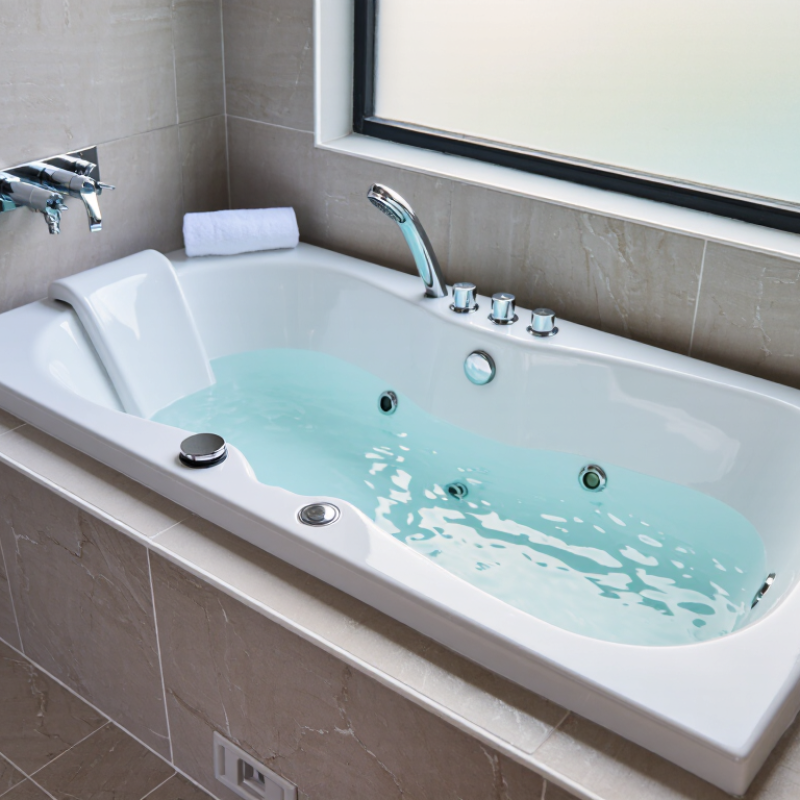
Compare water-jet and air-jet systems, too. Water jets give a focused massage; air jets create a gentler, bubbly feel. Jet placement matters more than a long feature list: check that jets meet your seated body, not just your calves. A drop-in shell can fit a custom deck, but that deck consumes floor area and can complicate pump access. Not glamorous, but important.
Capacity affects more than comfort. The U.S. Department of Energy estimates water heating uses about 18% of household energy, so a larger fill volume can mean greater heating demand. Check the tub’s stated capacity, then compare it with your water heater’s recovery rate and household use. Leave access to the pump and service panels. One trade-off is easy to miss: a compact outer size can still have a cramped bathing well. Inspect interior dimensions and seat shape before deciding.
Evaluate Jet Systems, Controls, and Comfort Features
A compact whirlpool bath should feel restorative, not noisy or cramped. Compare jet placement with your seated position: jets aimed at your lower back may feel useful, while a powerful stream against your calves can become irritating. Ask whether air controls adjust intensity independently. A single on-off button offers less flexibility than variable-speed settings. Listen to the pump if possible. It can sound louder in a tiled room than in a showroom.
Controls matter most when they are wet, dim, or hard to reach. Look for clearly marked buttons, an easy-to-read temperature display, and a control you can operate without leaning across the tub. The U.S. Consumer Product Safety Commission advises keeping spa water at or below 104°F (40°C). Treat that as a safety reference, and follow the bath manufacturer’s instructions. Comfort is personal. A lower setting may suit a long soak better.
Check what the system actually does. Some tubs circulate water through jets; others add air bubbles, and the sensation differs. If a handheld rinse is included, the U.S. EPA’s WaterSense specification sets a 2.0-gallon-per-minute limit for labeled showerheads, compared with the federal 2.5-gallon benchmark. That figure applies to the rinse fixture, not the tub’s filling or jet flow. Small details can disappoint: a control placed just beyond easy reach is still awkward, even in a beautiful bath.
Check Installation Requirements, Safety, and Energy Use
How to Choose the Best Small Jacuzzi Bath in 2026?
A compact bath still needs careful planning. Measure the room, doorway, and route from the entrance before ordering. Leave space to reach the pump and plumbing later; a tightly boxed-in bath can turn a small leak into a costly repair. Check the filled weight, including water and bathers, against the floor’s capacity. Ask a qualified building professional if you are unsure.
Electrical safety matters. Follow the installation manual and local requirements, and have a qualified electrician assess the circuit and protective device. Keep electrical connections away from splash zones. Test that the bath drains properly and that the floor stays dry. Small details count.
Energy use depends on more than the heater’s rated power. Compare the pump and heater specifications, then consider how often you will run them and for how long. A well-insulated bath may retain heat better, but check whether the model has an insulated shell and a fitted cover. Look for accessible filters and simple controls, too. They can make regular care less of a chore. I would not choose on energy claims alone; real use varies, and estimates can be imperfect. Make the room work first.
