How to Choose the Best Movable Homes for Your Lifestyle?
Choosing the best movable homes for your lifestyle requires careful thought. Many factors influence this decision. Movable homes provide freedom and flexibility, but they also come with challenges.
Consider your personal needs. Do you value space or mobility? A larger movable home offers comfort, while a smaller option may be easier to relocate. Each choice has its pros and cons. Reflect on your daily routine. How often will you move?
Not all movable homes suit every lifestyle. You may find that your initial choice feels limiting over time. Evaluate your priorities. Think about your family, work, and hobbies. Your ideal movable home should adapt to your life changes.
Understanding Your Lifestyle Needs for a Movable Home
Understanding your lifestyle needs is crucial when choosing a movable home. Every individual or family has different priorities. According to a recent industry report, 30% of mobile home residents prioritize space, while 25% focus on mobility. This data reflects how varied preferences can be.
Consider your daily routine. If you enjoy outdoor activities, a home with easy access to nature is ideal. On the other hand, if you work remotely, a spacious interior with a dedicated office space is essential. Many movable homes offer flexible layouts, but they often come with trade-offs. For instance, smaller homes may lack storage, leading to clutter and frustration.
The location is another key factor. Do you want to be near urban conveniences or rural tranquility? According to housing trends, 40% of new buyers prefer suburban areas for a balanced lifestyle. However, this choice can limit mobility. Reflect on how these elements impact your daily life and well-being. Your movable home should enhance your lifestyle, not complicate it.
Different Types of Movable Homes and Their Features
When choosing a movable home, consider the various types available.
Tiny homes are popular for their minimalism. They often range from 100 to 400 square feet.
Many feature multifunctional furniture, maximizing space efficiency. However, living in a tiny home may feel cramped for some.
Downsizing your possessions is essential, which can be a challenging adjustment.
Another option is park model RVs.
These units are larger than typical campers. They often come with full kitchens and bathrooms. Park models can be stationary or mobile.
This flexibility can suit different lifestyles. Yet, they may not be ideal for those seeking a permanent residence.
Accessibility to utilities varies depending on location.
Container homes are another intriguing choice. They repurpose shipping containers into livable spaces.
These homes can be stylish and eco-friendly.
However, insulating them properly is crucial. Without insulation, they can become too hot or cold.
Personal preferences play a significant role in the decision-making process.
Exploring different features helps in finding a movable home that truly fits your lifestyle.
Key Factors to Consider When Choosing a Movable Home
Choosing a movable home requires careful thought. One key factor is size. Consider how much space you need for your family and belongings. Too small can feel cramped. Too large can strain your budget. Measure your current space to get a better idea of the size that works for you.
Another important aspect is location. Think about where you want to live. Some areas have great amenities, while others might be isolated. Proximity to work and schools can be crucial. Research local regulations, too. Some places have restrictions on movable homes. Ignoring these can lead to expensive setbacks.
Don't overlook layout and design. Open spaces can feel inviting but may lack privacy. A cramped design might work for one person, not another. Visualize how you will function in the space daily. It’s all about balancing your needs with practical living. Reflect on what truly brings you comfort and happiness in a movable home.
How to Choose the Best Movable Homes for Your Lifestyle? - Key Factors to Consider When Choosing a Movable Home
| Factor |
Description |
Importance Level |
| Size |
Consider how many people will live in the home and the space required for comfortable living. |
High |
| Budget |
Determine your total budget, including purchase price, taxes, and set-up costs. |
Critical |
| Mobility |
Assess how frequently you plan to move the home and the ease of transportation. |
Moderate |
| Lifestyle Needs |
Evaluate your specific needs such as work, family, and recreational space. |
High |
| Energy Efficiency |
Check for insulation, energy sources, and eco-friendly features to save on utilities. |
Important |
| Durability |
Look for quality materials and construction techniques that withstand the elements. |
Critical |
Budgeting for Your Movable Home: Costs and Financing Options
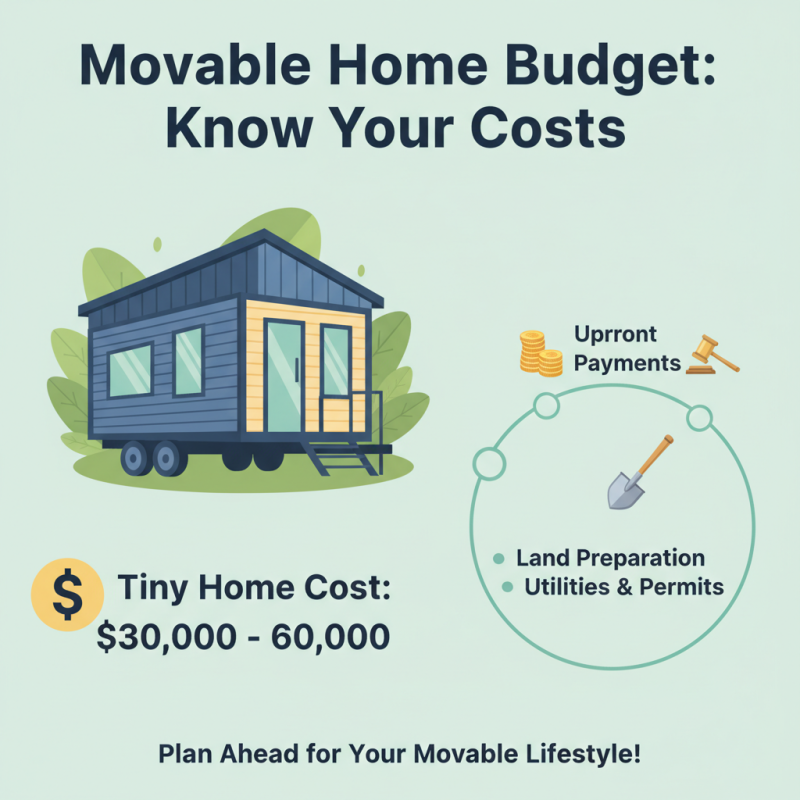
When budgeting for a movable home, know your costs. The average cost of a tiny home ranges from $30,000 to $60,000. Upfront payments can be significant. Consider land preparation, utilities, and permits.
Financing options exist, but they vary. Traditional loans often do not cover movable homes. A specialized lender may help. Personal loans or RV loans can be alternatives. Understand interest rates; they can be high. Average rates can reach 8% or more.
Evaluate your lifestyle. Frequent travelers might find it costly. Maintenance might also be a challenge. Each move can impact your budget. Research thoroughly. Every decision affects your finances. Planning is essential.
Evaluating Location and Mobility for Your Ideal Home Choice
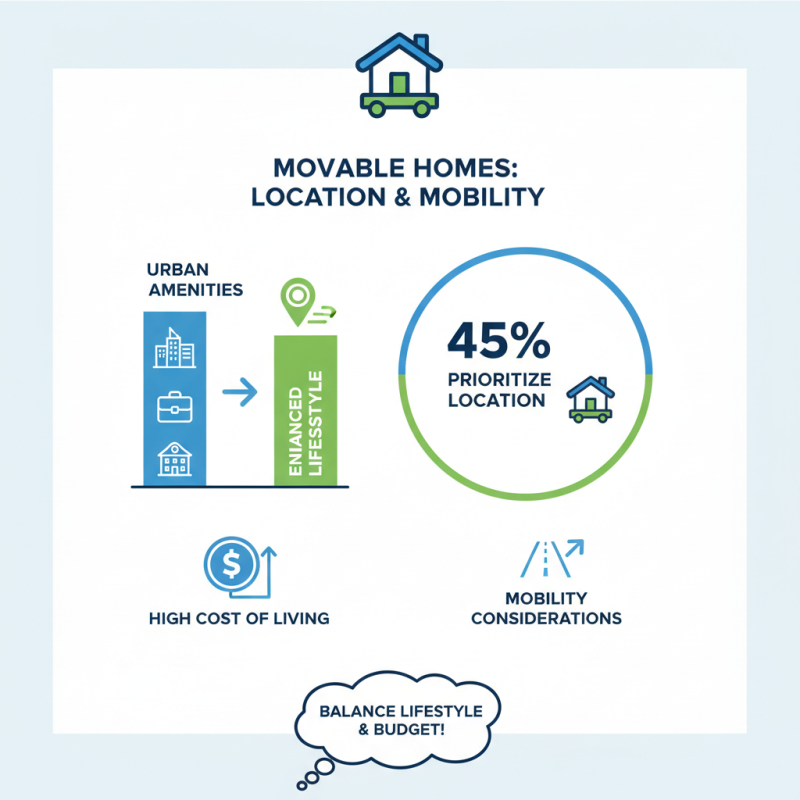
When choosing movable homes, evaluating location and mobility is crucial. Research shows that about 45% of mobile homeowners prioritize location as a key factor. A great location enhances lifestyle options, including schools, jobs, and recreation. For example, homes close to urban centers often provide better access to amenities. However, the cost of living in these areas can be high, sometimes exceeding the budget of potential buyers.
Mobility is another vital aspect to consider. The convenience of relocating your home can significantly affect your lifestyle. A survey indicated that 30% of buyers wish to relocate every few years. They enjoy changing environments and experiences. Yet, frequent moves can incur costs. Moving fees, settling in, and potential damages during transport can add up quickly. Balancing mobility with financial stability is necessary.
Be mindful of your priorities. Living in a rural area may offer tranquility but limits job opportunities. Urban living presents excitement and accessibility, but it can be overwhelming. Reflecting on your lifestyle and long-term goals will guide your final decision effectively.