What is a Construction Truck and How to Choose the Best One?
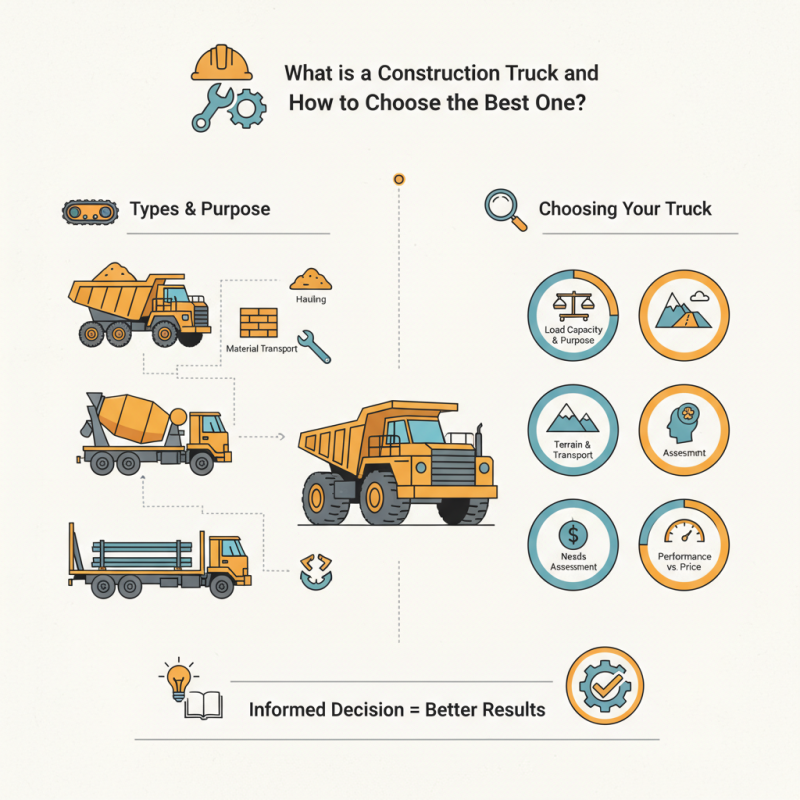
A Construction Truck is an essential vehicle in the building industry. These trucks come in various types, each designed for specific tasks. Some are built for heavy hauling, while others are more suited for transporting materials. Choosing the best Construction Truck can significantly impact efficiency and productivity on a job site.
When selecting a Construction Truck, consider the load capacity and purpose. Some trucks excel in rough terrains, while others are designed for on-road transport. It is important to assess your specific needs and the challenges you may face. This reflection can help prevent costly mistakes.
Navigating through options can be overwhelming. Many brands offer numerous models with various features. Finding the right balance between performance and price is crucial. It’s not just about horsepower; understanding the truck's additional capabilities is necessary. Take the time to do thorough research before making a decision. A well-informed choice will lead to better results on your construction projects.
What is a Construction Truck and Its Purpose in Construction Projects?
Construction trucks play a vital role in construction projects. They are designed to transport materials efficiently across job sites. The National Institute of Building Sciences reports that effective material handling can reduce project costs by as much as 15%. This highlights the importance of choosing the right truck for specific tasks.
Different types of construction trucks serve unique purposes. For instance, dump trucks are crucial for moving loose materials like sand or gravel. On the other hand, concrete mixers are essential for projects requiring precise blending of concrete. The American Concrete Institute states that poor mixing can lead to reduced structural integrity. Therefore, selecting a truck based on the operational needs is key for successful project completion.
It's also essential to consider the truck's operational limits. A truck that is too small may hinder progress and lead to delays. Conversely, oversized vehicles may cause site damage and increase costs. Data from the Construction Industry Institute shows that equipment mismanagement can lead to 10% of project delays. Construction managers must balance truck capacity with site conditions to optimize efficiency and safety.
Different Types of Construction Trucks and Their Specific Uses
Construction trucks are essential for various projects. Different types serve unique purposes. Understanding these types is crucial when selecting the right truck.
Dump trucks are one of the most common construction trucks. They are used for transporting loose materials, like sand and gravel. According to the Construction Equipment Manufacturers Association, the industry saw a 15% increase in demand for dump trucks last year. Operators appreciate their efficiency in moving heavy loads quickly.
Concrete mixer trucks mix and deliver concrete on-site. They ensure the correct consistency and volume needed for projects. Research indicates that about 30% of construction delays are linked to material delivery issues. Choosing a reliable mixer truck can help avoid these setbacks.
Flatbed trucks provide versatility for transporting equipment and materials. Their open design allows for easy loading and unloading. However, they may pose safety risks during transport if loads are not secured properly. Considering these factors is key to optimizing operational efficiency. Each truck type presents unique challenges and benefits. Understanding these can lead to better decision-making in construction projects.
Key Features to Consider When Choosing a Construction Truck
When choosing a construction truck, several key features should be considered to ensure you select the best option for your needs. Capacity, for instance, is critical. Reports indicate that trucks with a payload capacity between 10,000 to 30,000 pounds are most commonly used in construction. This range offers the versatility necessary for various tasks, from hauling materials to equipment transport.
Another crucial feature is the drivetrain. Trucks equipped with all-wheel drive are often favored for construction tasks. They provide better traction on rough terrains, enhancing safety and performance. According to industry data, all-wheel drive trucks reduce the likelihood of accidents by up to 25% in challenging conditions.
Additionally, consider the truck’s fuel efficiency. Trucks consuming less fuel not only lower operational costs but also reduce environmental impacts. Recent studies highlight that fuel-efficient trucks can save companies up to 15% on fuel expenses. Evaluating engine specifications and average miles per gallon (MPG) should be a priority. Effective analysis of these features can lead to better decisions. Each choice comes with potential shortcomings, requiring a thoughtful approach to find the right balance between power and efficiency.
Factors Affecting the Performance and Cost of Construction Trucks
When choosing a construction truck, several factors influence performance and cost. The truck's load capacity is crucial. It determines how much weight you can transport, directly affecting job efficiency. Smaller projects might need lighter trucks, while larger ones require heavy-duty options. Engine power also matters, as it impacts speed and fuel consumption. The right power helps navigate tough terrains and steep slopes.
Another important aspect is the type of materials you’ll be hauling. Building sites often require trucks that can handle various bulk materials. Some might need specialized equipment, like dump beds or crane attachments. Maintenance history is key too. A truck with frequent repairs can lead to higher costs in the long run. Buyers should consider fuel efficiency as a lasting operational cost. A truck that guzzles fuel can significantly affect your budget over time.
Finally, financing options should be evaluated. Leasing may offer flexibility, but purchasing can be a better investment for long-term use. Researching local regulations is vital too, as some areas impose additional requirements on construction vehicles. Trucks that don’t align with these can lead to unnecessary fines and delays. Weighing all these factors is necessary for making a well-informed decision.
Maintenance Tips for Ensuring Longevity of Construction Trucks
When it comes to maintaining construction trucks, regular checks are crucial. Inspect tires for wear and ensure proper inflation. A well-maintained tire increases fuel efficiency and reduces operational risks. Check the brakes as well. They must be in top condition to ensure safety on site. Neglecting these components can lead to costly repairs.
Fluid levels should be routinely monitored. Engine oil, transmission fluid, and coolant need to be at proper levels. Low fluid levels can damage machinery over time. This requires diligence from operators. Regular oil changes are essential. They prevent engine wear and promote longevity.
Cleaning the truck is often overlooked. Dust and debris can lead to rust and corrosion. Regular washes protect the exterior and maintain appearances. Consider investing in protective coatings. They can add a layer of defense against harsh conditions. In summary, a proactive maintenance approach ensures that construction trucks operate efficiently and have a longer lifespan.
Construction Truck Types and Their Average Load Capacity
