Top Prefab Modular Buildings Manufacturers Worldwide?
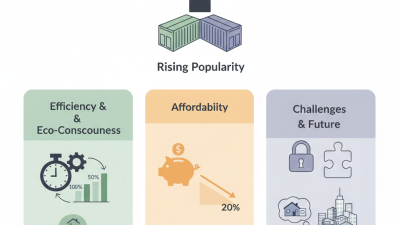
Prefab modular buildings are moving from specialist projects into mainstream construction. Factories now produce hotel rooms, classrooms, clinics, offices, and housing modules under controlled conditions. This shift matters because crowded sites often create delays, waste, and inconsistent workmanship. The McKinsey Global Institute report, Modular Construction: From Projects to Products, estimated that modular methods could reduce project costs by up to 20% and shorten schedules by 20–50%. Those figures are promising, but they are not universal guarantees. Design changes, transport distances, and foundation work still affect the final result.
Market forecasts also show strong momentum. Grand View Research projects continued growth in the global modular construction market through 2030, although estimates vary because researchers define “modular” differently. That inconsistency deserves attention. A factory-built bathroom pod is not identical to a complete volumetric building. Tom Hardiman Jr., Executive Director of the Modular Building Institute, describes the approach clearly: “Modular construction is a process, not a product.” His point helps frame this guide.
The manufacturers reviewed here are judged through practical criteria. These include engineering capability, factory certification, geographic reach, delivery history, customization, and after-sales support. Sustainability performance also matters. A polished showroom is not enough. Buyers should examine thermal performance, fire testing, embodied carbon data, and actual installation records. This comparison is not perfect. Public information differs between companies, and private manufacturers rarely disclose every metric. Still, it offers a useful starting point for identifying leading prefab modular buildings manufacturers worldwide and understanding where each company performs best.
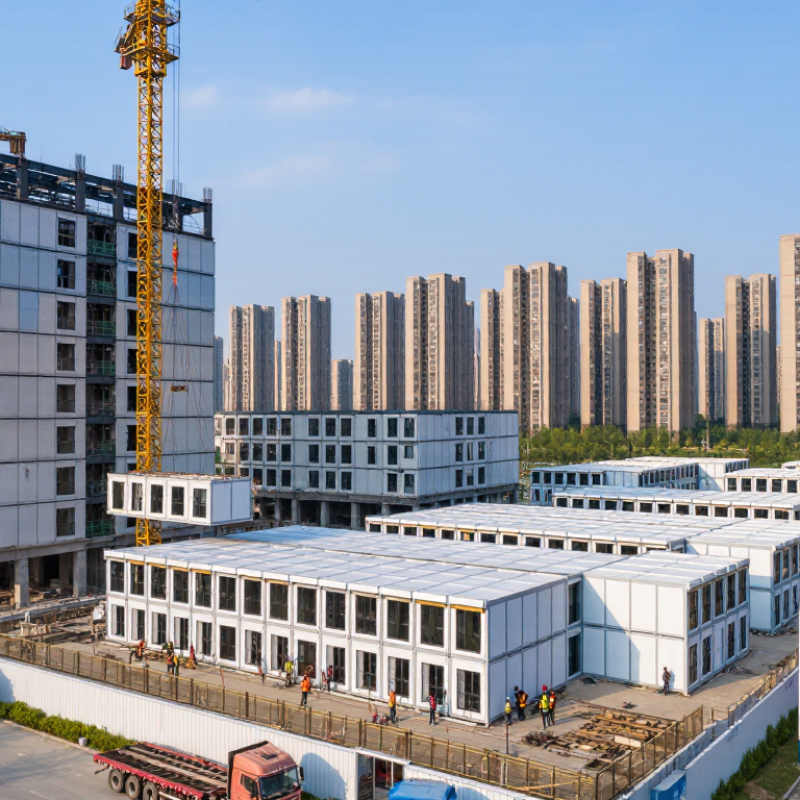
Definition and Scope of Prefab Modular Buildings
Prefab modular buildings are structures made partly or largely in controlled factory conditions, then transported for final assembly. “Prefab” describes the production method, while “modular” usually refers to three-dimensional units built off-site. These units may include floors, walls, ceilings, wiring, plumbing, insulation, and interior finishes.
The scope is broad. It covers temporary classrooms, site offices, healthcare rooms, worker accommodation, retail spaces, and permanent housing. Some projects use complete volumetric modules. Others combine factory-made panels with conventional construction. The boundary is not always clean. A factory-built panel does not automatically make an entire building modular.
Experienced manufacturers manage more than production speed. They coordinate structural design, transport limits, lifting points, local climate, fire performance, energy use, and site access. A module may look simple, yet a narrow road or weak foundation can change the whole delivery plan. Quality control is also more measurable indoors, where teams can inspect joints, moisture protection, and service connections before shipment.
However, factory construction is not automatically cheaper or greener. Transport distance, repeated designs, material waste, and local labor conditions still matter. Poor coordination can create expensive adjustments on site. This is where reliable technical documentation becomes essential. Clear drawings, tested materials, installation records, and maintenance guidance help clients compare manufacturers across regions. The strongest definition, therefore, includes both the building’s physical form and the controlled process behind it.
Key Criteria for Evaluating Global Manufacturers
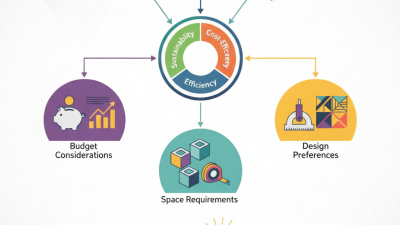
Choosing a global prefab modular buildings manufacturer requires more than comparing factory photos and quoted prices. Assess production capacity, engineering depth, and delivery history across similar climates. McKinsey’s 2019 report found that modular construction can reduce project schedules by 20–50% and costs by up to 20% when systems are standardized. However, these gains depend on early design coordination and reliable logistics.
Technical compliance should be checked before commercial negotiations. Request evidence of ISO 9001 quality systems, material traceability, fire testing, structural calculations, and local code approvals. Review factory inspection records, welding procedures, moisture protection, and tolerance controls. A manufacturer may produce quickly, but poor dimensional accuracy can create expensive site repairs. Sustainability also needs measurable proof. The 2023 Global Status Report for Buildings and Construction reported that buildings represented about 34% of global energy demand and 37% of energy and process-related emissions in 2022. Ask for embodied-carbon data, recycled-content records, and energy performance calculations. Reports are not perfectly comparable, and that limitation deserves attention.
Tips: Compare delivered cost, not factory price. Examine three completed projects in different regions. Ask who manages customs, foundations, installation, and warranty claims. Check whether replacement panels remain available after production ends. A useful scorecard should weight compliance, quality, lead time, service, carbon data, and financial stability. Trust documented performance, not confident promises.
Leading Prefab Modular Building Manufacturers Worldwide
Leading prefab modular building manufacturers worldwide are reshaping construction through factory-controlled production, repeatable designs, and faster site assembly.
McKinsey’s report, Modular Construction: From Projects to Products, estimates that modular methods could create more than 100 billion dollars in annual value across major construction markets. It also identifies potential cost reductions of 5% to 10%, although results vary by design, transport distance, and local labor conditions.
Manufacturers with global reach usually combine steel or timber frames, insulated wall panels, digital coordination, and standardized service connections. A finished module may arrive with wiring, plumbing, flooring, and bathroom fixtures already installed.
That detail matters. The UN Environment Programme’s 2024 Global Status Report states that buildings and construction consume 32% of global energy and produce 34% of global carbon dioxide emissions. Factory production can reduce material waste, but transportation and foundation work still affect the final footprint.
Speed is attractive. Quality is harder.
The Dodge Construction Network SmartMarket research has reported that modular users commonly experience schedule improvements and better cost predictability. However, manufacturers must prove those advantages on each project, not only in brochures.
Weather delays may fall, yet poor coordination can create expensive redesigns. Leading suppliers therefore need documented factory inspections, traceable materials, tested fire performance, and reliable after-sales support.
The industry remains uneven; some claims are optimistic. Buyers should compare audited project data, installation records, and lifecycle performance before selecting an international manufacturing partner.
Manufacturing Technologies and Modular Construction Methods
Choosing top prefab modular building manufacturers worldwide requires more than comparing factory size. Manufacturing technology reveals real capability. BIM-to-factory workflows can transfer digital models directly to CNC cutting, robotic welding, and automated quality checks. Volumetric modules arrive with walls, services, and finishes installed. Panelized systems offer lighter transport and greater design flexibility. Each method suits different sites.
McKinsey’s 2019 report estimated that modular construction could create a 130-billion-dollar market in Europe and the United States by 2030. It also identified potential cost reductions of up to 20 percent and shorter schedules. The World Economic Forum has reported that industrialized construction may reduce project timelines by 20 to 50 percent. These figures are persuasive, but they are not automatic results. Factory efficiency can disappear through poor logistics, late design changes, or unsuitable site access.
A reliable manufacturer should document material traceability, dimensional tolerances, fire testing, and inspection records. Ask how engineers manage interfaces between modules, foundations, plumbing, and electrical systems. Watch the production line, not only the showroom. A clean welding bay, labeled components, and repeatable inspection points provide useful evidence. Dodge Data & Analytics has also linked prefabrication with improved project productivity and schedule control. Still, a perfect factory cannot repair weak coordination. In practice, the best method may be a hybrid system, although that choice is less impressive in marketing materials.
Top Prefab Modular Buildings Manufacturers Worldwide: Manufacturing Technologies and Modular Construction Methods
The chart compares typical proportions of construction work completed in a controlled factory environment. Volumetric modular construction generally achieves the highest level of off-site completion, while component-based prefabrication transfers a smaller but still significant share of work from the site to the factory.
Industry Applications, Standards, and Future Developments
Prefab modular buildings now serve hospitals, schools, worker housing, offices, and emergency facilities.
Factory production improves repeatability, but site conditions still matter. McKinsey’s 2019 report, Modular Construction: From Projects to Products, found that modular methods can reduce construction schedules by 20–50%. The result depends on design maturity, transport planning, and local assembly skills. A rushed design creates expensive changes later.
Standards shape reliability across borders.
Manufacturers should align structural design with local building codes, fire safety rules, accessibility requirements, and electrical standards. ISO 23386 supports consistent data for construction objects, helping teams exchange digital information more accurately.
The International Energy Agency reported that buildings consumed about 30% of global energy in 2022. Better insulation, airtight joints, heat pumps, and factory quality checks can lower operational demand. Yet embodied carbon remains easy to overlook. UNEP’s 2023 Global Status Report for Buildings and Construction recorded that buildings and construction produced approximately 37% of global energy-related and process emissions.
Tips: Request tested wall assemblies, moisture records, lifting plans, and third-party inspection evidence. Check replacement access before signing. Small details matter.
Future development will combine modular units with digital twins, robotic fabrication, and recyclable materials.
Sensors may track moisture behind panels before damage becomes visible. However, not every project needs maximum automation. This is where industry thinking must improve. A highly standardized module can reduce waste, but it may fit poorly on irregular sites.
Reliable manufacturers should publish performance data, explain limitations, and document lessons from failed installations. Credibility grows through evidence, not confident claims.