What Are the 2026 Top Prefab Units for Global Buyers?
Global buyers entering the 2026 prefab market face more than a choice of attractive floor plans. They must compare thermal performance, structural durability, transport limits, installation requirements, and verified supplier records. The most promising prefab units may include modular homes, expandable container-style rooms, flat-pack cabins, and factory-built commercial offices. Each option serves a different climate, budget, and approval process.
A reliable evaluation begins with evidence. Look for documented materials, independent quality inspections, clear warranties, and compliance with the destination country’s building standards. A unit designed for a snowy region needs stronger roof loads and insulation than one shipped to a tropical coast. Buyers should also examine crane access, foundation preparation, customs paperwork, replacement parts, and local labor availability. Small details matter. A missing connector can delay installation for days.
Price alone can mislead. Shipping a low-cost unit across oceans may erase its initial advantage. Experienced buyers request itemized quotations, production photographs, sample specifications, and references from completed projects. Still, no supplier is perfect, and published performance claims deserve careful checking. This guide reviews the 2026 top prefab units for global buyers through practical criteria rather than marketing language. It considers usability, lifecycle value, regional adaptability, and supplier transparency, helping readers make a confident decision while recognizing one uncomfortable truth: the best unit on paper may not be the best unit for your site.
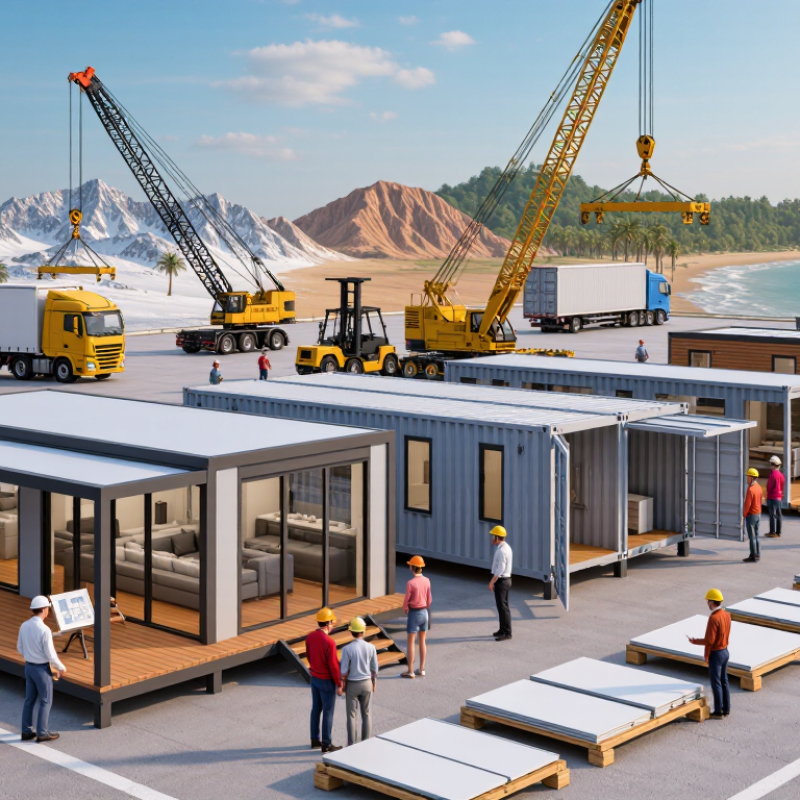
What Makes a Prefab Unit Suitable for Global Buyers in 2026?
What makes a prefab unit suitable for global buyers in 2026 is not appearance alone. It must survive different climates, regulations, transport routes, and installation skills. The International Energy Agency reports that buildings consume about 30% of global final energy and create roughly 26% of energy-related emissions. Therefore, buyers should examine insulation, airtightness, shading, ventilation, and measurable energy performance. A compact unit with poor thermal detailing is not truly efficient.
Reliable documentation matters as much as factory production. Each unit should include structural calculations, material certificates, fire-safety evidence, wiring diagrams, maintenance instructions, and clear adaptation limits. The World Bank’s Logistics Performance Index shows major differences in customs efficiency, infrastructure, and delivery reliability between markets. Export-ready units therefore need protected connection points, standard lifting interfaces, replaceable components, and packaging designed for long journeys. Small details prevent expensive surprises.
The best unit also fits local labor realities. It should arrive with simple assembly sequences, multilingual manuals, and components available for regional repair. The McKinsey Global Institute has reported that modular construction can reduce project schedules and improve cost control, but these benefits depend heavily on planning and supply-chain coordination. That warning deserves attention. Factory precision cannot repair weak foundations or unclear permits. A practical buyer may accept fewer decorative options in exchange for easier approval, faster installation, and dependable long-term maintenance. Perfect standardization is not always the answer.
Which Types of Prefab Units Are Expected to Lead the 2026 Market?
In 2026, volumetric modular units are likely to lead international prefab demand. They arrive as factory-built rooms, reducing on-site assembly and weather delays. Mordor Intelligence estimates the modular construction market could grow from about USD 92.7 billion in 2025 to USD 117.3 billion by 2030. That growth supports repeatable housing, workforce accommodation, and student residences. The numbers vary by methodology.
Panelized units should remain strong where transport costs or local planning rules limit complete modules. Wall, floor, and roof panels fit regional designs more easily. Grand View Research reports that the global prefabricated construction market was valued near USD 153.7 billion in 2023. Its forecast indicates continued growth through 2030, supported by labor shortages and faster project delivery. In practical projects, panels can reduce site congestion, but poor detailing can create moisture problems.
Hybrid systems may attract buyers seeking flexibility. They combine volumetric rooms with panelized façades, structural frames, or bathroom pods. Healthcare, hotels, and compact urban housing are suitable applications. A 2024 MarketsandMarkets report identifies modular construction as increasingly valuable for controlled quality and shorter schedules. Yet factory precision does not guarantee a perfect building. Buyers still need verified fire ratings, insulation data, shipping calculations, and local compliance reviews. Smaller bathroom and kitchen pods may also expand because they simplify repetitive installation. Forecasts are useful, but regional demand remains uneven.
How Do Materials, Designs, and Technologies Shape Unit Performance?
Global buyers in 2026 will judge prefab units by performance, not appearance alone. Materials control comfort, durability, transport weight, and maintenance needs. Insulated panels can reduce heat transfer, while corrosion-resistant frames support humid or coastal locations. Recycled materials may lower environmental impact, but their strength and repair options require careful verification. Green claims need evidence.
Design also shapes daily efficiency. A compact unit with cross-ventilation can reduce cooling demand in warm regions. Wider roof overhangs protect entrances from heavy rain. Factory-fitted plumbing can shorten installation time, yet connections must match local infrastructure. In field inspections, small alignment errors often create leaks around windows. That detail matters.
Technology adds measurable value when it solves a real problem. Digital monitoring can track temperature, humidity, and energy use after installation. Standardized modules simplify replacement, especially when buyers operate across several countries. However, sensors need stable power and clear maintenance procedures. Otherwise, they become expensive decorations. Testing should cover transport vibration, wind loads, fire resistance, and repeated assembly. No unit performs perfectly. Even strong designs may underperform when local workers lack training or spare parts. I would also question units that promise low energy use without showing climate-specific test data. Reliable performance comes from verified materials, practical layouts, and technology that remains usable after the sales team leaves.
What Are the 2026 Top Prefab Units for Global Buyers?
How Do Materials, Designs, and Technologies Shape Unit Performance?
What Global Standards and Regulations Should Buyers Check?
For global buyers, a prefab unit is not compliant merely because it left a certified factory. The destination country controls final approval. Ask whether the unit is treated as a building, movable structure, or temporary installation. That classification affects permits, foundations, fire rules, and inspection duties. Check the local building code before signing drawings. A cheap redesign later is rarely cheap.
Review structural calculations for wind, snow, seismic loads, corrosion, and lifting points. Request material certificates, welding records, and factory quality-control reports. Electrical systems should match local voltage, frequency, earthing, sockets, and protective devices.
Plumbing needs verified pipe materials, pressure tests, drainage connections, and potable-water safeguards. Check fire resistance for walls, doors, insulation, alarms, escape routes, and compartmentation. Energy rules may require insulation values, air sealing, ventilation, and efficiency evidence. Ask a licensed local professional to confirm each item.
International shipments also need accurate dimensions, weights, packing plans, and customs documents. The transport route may limit height, width, or crane access. For European projects, applicable conformity rules may cover electrical equipment, machinery, or construction products. A CE mark alone does not approve an entire building. Other markets use different approval paths. Use independent inspection at the factory and again on site. Keep drawings, test results, serial records, and change logs. No checklist is perfect. Recheck assumptions after the first installation, especially when local officials interpret requirements differently.
How Can Buyers Compare Costs, Suppliers, Delivery, and Installation?
For global buyers, prefab unit prices rarely show the real project cost. Compare the total landed cost: factory price, packaging, ocean freight, insurance, duties, inland transport, foundations, crane hire, and installation labor. McKinsey’s 2019 report, Modular Construction: From Projects to Products, estimates that modular methods can reduce construction schedules by 20–50% and costs by up to 20%. These figures are useful benchmarks, not promises. Site access can erase the savings.
Ask each supplier for identical drawings and specifications. Check structural calculations, fire performance, insulation values, factory quality records, and previous export projects. Request a clear warranty and a defect-response timeline. An experienced buyer should also inspect production controls, even through an independent auditor. Cheap quotes often exclude utility connections, internal finishes, or local compliance work. That omission matters.
Delivery needs its own comparison sheet. Measure production time, port handling, customs documents, inland distance, and weather exposure. UNCTAD’s Review of Maritime Transport 2024 reports that over 80% of world merchandise trade by volume moves by sea, so port disruption can affect schedules sharply. Confirm container dimensions, lifting points, packing methods, and unloading responsibility before signing. Installation quotes should identify the crane capacity, crew size, foundation tolerance, weather limits, testing, and final handover. I would not trust a “turnkey” label without a task-by-task scope. Some projects still need local redesign. That is an uncomfortable, but practical, cost.
Related Posts
-
How to Choose Prefab Modular Buildings for Your Project?
-

How to Choose the Best Movable Homes for Your Lifestyle?
-
What Are the Top Types of Prebuilt Homes?
-

Top 10 Movable Homes for Sale Worldwide
-

10 Tips for Choosing Prefab Home Designs Worldwide
-

How to Source Modular Homes at the 139th Canton Fair?