China Top 10 Prefab Modular Homes Manufacturers

China’s prefab modular homes sector spans compact cabins, workforce housing, villas, and larger residential projects. The phrase “top 10” is useful for beginning research, but it should not imply a universal ranking. A supplier that fits a coastal resort may not suit a cold-climate family home. Project needs differ.

This guide introduces ten Chinese manufacturers and explains what buyers can compare before requesting quotations. Look beyond polished renderings. Ask for current factory images, project references, floor plans, structural specifications, insulation details, and a clear list of included finishes. A doorway, window seal, or wall-panel joint can tell you more than a broad marketing claim. Small details matter.

Reliable evaluation also means checking production capacity, customization options, quality-control procedures, delivery scope, and after-sales support. Confirm how the quoted price treats packing, transport, installation, and site preparation; these items can change the real budget. Request drawings and specifications in writing, then compare equivalent designs rather than headline prices alone. Ask who coordinates design changes after the production drawings are approved. A low quote may omit important work. That deserves a second look.

No directory can replace project-specific verification. Climate, local building requirements, access to the site, and intended use all affect suitability. Some information may be difficult to compare across companies, and public claims are not always independently verified. Treat this overview as a starting point, not a final endorsement. The best shortlist is the one that fits your plans, evidence, and practical constraints.

China Top 10 Prefab Modular Homes Manufacturers

What Defines a Prefab Modular Home?

A prefab modular home is built in sections inside a factory, then transported to a site for assembly. The sections may contain finished walls, wiring, plumbing, windows, and interior surfaces. Once joined, the home is designed to function as one building, often on a permanent foundation. That distinction matters. It is not simply a small house delivered in one piece.

The McKinsey report “Modular construction: From projects to products” (2019) found that modular methods could shorten construction schedules by 20–50% and reduce costs by up to 20% in suitable projects. These figures describe potential, not a promise for every home. Site access, transport distance, design complexity, and local inspection requirements can change the outcome. A factory is not a quality guarantee.

A useful definition includes both factory production and final on-site integration. Buyers should ask how modules are joined, how seams are sealed, and how plumbing and electrical systems are checked. Look closely at a corner joint or window reveal; small gaps can signal larger installation issues. The factory setting can improve repeatability, but it cannot remove every risk. This point deserves more attention than glossy renderings often receive.

How China’s Prefab Modular Home Industry Is Structured

China’s prefab modular home industry is not a single factory business. It is a layered supply network. Upstream suppliers provide steel frames, insulation, wall panels, windows, wiring, and plumbing components. Manufacturers combine these inputs in factories, where repeatable assembly can improve consistency and reduce on-site work.

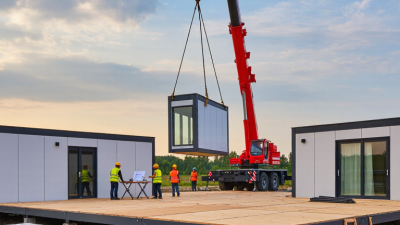
The market includes several production models. Some firms focus on structural modules, while others deliver finished units with bathrooms, kitchens, and interior surfaces installed. A project may also involve independent designers, freight coordinators, lifting crews, and local contractors. Their coordination matters: a module that fits the factory drawings may still need adjustments for the site, climate, or utility connections. Small details count. Door clearances, drainage points, and lifting positions can affect installation time.

Quality control is shared across the chain, not limited to the factory floor. Buyers can review material specifications, inspect sample assemblies, and ask how testing records are maintained. The level of documentation can differ between suppliers, so comparisons should use the same scope and performance criteria. That part is sometimes less tidy than brochures suggest. Shipping dimensions, packaging, and local installation capacity also shape the final cost. The industry is growing, but its structure remains varied: integrated manufacturers sit alongside specialist suppliers and project-based assembly teams.

China Top 10 Prefab Modular Homes Manufacturers — How China’s Prefab Modular Home Industry Is Structured

Industry overview: This table maps ten common manufacturer and supplier models in China’s prefab housing sector. It is a structural overview, not a ranked list of named companies; actual product scope, certifications, capacity, and export experience vary by supplier and project.

Industry Segment Typical Product Focus Common Construction System Typical Factory Scope Common Project or Buyer Type Key Evaluation Points
Volumetric modular home manufacturers Room-sized or multi-room modules assembled into homes and accommodation buildings Three-dimensional modules using steel or timber framing, with finishes and services installed to varying levels before delivery Module fabrication, fit-out, factory inspection, and coordination of site installation Housing developments, workforce accommodation, and projects seeking a high degree of off-site construction Module dimensions, transport limits, connection details, factory quality procedures, and installation planning
Panelized building manufacturers Wall, floor, and roof panels supplied for on-site assembly Prefabricated timber or steel-framed panels, sometimes with insulation, sheathing, or service openings Panel cutting and assembly, labeling, packaging, and preparation of installation documentation Builders and developers with local crews and established site-management capacity Panel tolerances, weather protection, structural design coordination, and clarity of assembly instructions
Light-gauge steel housing specialists Structural frames, panelized shells, and complete light-steel housing packages Cold-formed, light-gauge steel sections assembled into frames or wall panels Profile forming, frame or panel assembly, corrosion-protection checks, and component packing Residential projects requiring engineered steel framing or repeatable component production Structural calculations, connection design, coating specification, thermal-bridge detailing, and local code compliance
Timber prefab housing manufacturers Timber-frame panels, roof systems, and prefabricated residential shells Engineered or solid timber framing, with panel build-up selected for the intended climate and building design Timber processing, frame assembly, panel preparation, and moisture-conscious packaging Low-rise housing, resort accommodation, and projects where timber construction is specified Timber grading, moisture management, fire and acoustic design, treatment requirements, and local material rules
Container-based accommodation suppliers Portable cabins, site offices, dormitories, and container-style living units Steel container-like frames or modular steel units adapted for occupancy Frame fabrication, interior fit-out, basic electrical and plumbing installation, and transport preparation Construction sites, temporary accommodation, remote facilities, and relocatable-use projects Intended use, insulation and ventilation, fire safety, utility connections, lifting points, and transport condition
Bathroom and kitchen pod manufacturers Factory-assembled bathroom pods and, in some cases, kitchen or utility pods Self-contained service modules designed to connect with a building’s structure and utility systems Pod assembly, fixture installation, service testing, and interface coordination with the main building Hotels, apartments, student housing, and other repeat-layout projects Service connection interfaces, waterproofing, access for maintenance, testing records, and lifting logistics
Turnkey prefab home integrators Coordinated packages that may include design, structure, finishes, and installation services One or more systems, such as volumetric modules, panels, timber frames, or light-gauge steel Supplier coordination, package definition, production scheduling, and project-level delivery management Overseas buyers or developers seeking a single point of coordination for multiple building components Scope boundaries, design responsibility, specification control, contract terms, and who handles permits and site work
Prefab structural component manufacturers Frames, trusses, floor cassettes, roof elements, and other building components Factory-made structural assemblies designed to be incorporated into a wider building system Component fabrication, dimensional checks, marking, and shipment in installation sequence General contractors, local builders, and modular firms sourcing selected structural elements Approved drawings, material traceability, dimensional accuracy, connection details, and packaging protection
Interior fit-out and finishing specialists Prefabricated interior panels, cabinetry, doors, fixtures, and finished room components Interior assemblies integrated with a modular unit or installed on site after structural work Component manufacture, finish application, pre-assembly, and coordination with building services Modular home producers and developers looking to standardize interior specifications Finish samples, durability, dimensional coordination, replacement availability, and packaging for transit
Export-oriented prefab housing suppliers Home kits, modules, panels, or mixed packages prepared for international projects System depends on the project; products may be shipped as flat-packed components or completed modules Export packing, documentation support, shipping coordination, and product adaptation when specified Importers, developers, and contractors purchasing for projects outside mainland China Destination-country codes, documentation, customs and shipping scope, local engineering review, and after-sales support

Criteria for Evaluating Chinese Modular Home Manufacturers

Choosing among China’s top prefab modular home manufacturers requires more than comparing catalog prices. Start with the intended use, local climate, and site conditions. Ask for structural drawings, insulation specifications, fire-performance data, and a clear list of included finishes. A low quote may exclude transport, foundations, utility connections, or installation. Get each supplier to define these items in writing.

Tips: Request photos of completed projects, not only factory renderings. Ask whether you can inspect a production line or speak with a past buyer. Check how defects, spare parts, and schedule changes are handled. Small details matter.

Assess manufacturing consistency and communication, too. Look for documented quality checks at key stages, such as frame welding, moisture protection, and window installation. Request a sample wall section or inspect one before shipment; gaps around a window can become costly later. Confirm who coordinates packing, delivery, and on-site assembly, and ask for a realistic timeline with milestone dates. Compare answers across suppliers using the same questions. A polished brochure is not proof of reliable delivery. No checklist removes every risk, and factory visits can be difficult to arrange. Still, clear records and specific answers make comparison more dependable. Ask for revisions when terms remain vague.

Profiles of 10 Leading Prefab Modular Home Manufacturers in China

Profiles of ten Chinese prefab modular home manufacturers should compare factory systems, not just catalogue images. One group specializes in light-gauge steel villas, with insulated wall panels and quick on-site assembly. Another focuses on container-based units for temporary accommodation. Several offer permanent homes with steel frames, bathroom pods, and factory-fitted wiring. Other profiles cover timber cabins, expandable houses, low-rise apartment modules, rural housing kits, and customized resort units. The remaining makers may stand out for export packaging or integrated design and installation. These are useful distinctions, but actual capability varies by project.

McKinsey’s 2019 report, “Modular construction: From projects to products,” found that modular methods can reduce construction schedules by 20 to 50 percent and costs by up to 20 percent. These are potential gains, not promises. Compare each manufacturer’s audited factory capacity, material specifications, moisture protection, and delivery record. Ask to inspect a completed home, including corners, window seals, and service connections. A polished showroom is not enough.

Tips: Request drawings, a sample contract, and a written scope covering transport, foundations, and installation. Check who handles defects after handover. Details get missed.

How to Compare Manufacturers by Quality, Cost, and Delivery

When comparing China’s prefab modular home manufacturers, ask what “quality” means in measurable terms. Request drawings, material specifications, insulation values, and photos of completed units. Check how wall panels, roof joints, windows, and plumbing connections are inspected before shipment. Details matter. A polished showroom tells you less than a documented quality-control process. If possible, arrange an independent factory inspection or review a sample module before approving a large order.

Compare total landed cost, not just the factory price. Ask for a written breakdown covering design changes, packing, inland transport, shipping, and installation support. Confirm which items are excluded. A low quote can become expensive when specifications are vague; a high quote may include features you do not need. I would not treat the cheapest offer as a clear win. That assumption can fail, especially when finishes or insulation differ.

For delivery, request a production schedule with dates for design approval, fabrication, inspection, and dispatch. Ask how delays are reported and what happens if a component fails inspection. Check whether the stated lead time begins after the deposit or after final drawings are approved. Not always obvious. Keep communication in writing, and compare responses for clarity, not just speed. One imperfect detail: schedules can still shift because of custom revisions, so leave room for changes before booking site work.